Flooring ROI for Los Angeles Multifamily Properties: What Actually Pays Off
When you're managing multifamily units in Los Angeles, flooring decisions come up constantly — during turns, after water damage, before lease-up, or when you're trying to push rents higher. The question is never just what looks good. It's what actually holds up, attracts tenants, and makes financial sense.
Here's what years of renovation work across Southern California have taught us about flooring in multifamily.
Why Flooring Is One of the Highest-ROI Upgrades in Multifamily
Flooring is one of the first things a prospective tenant notices during a tour — and one of the first things they complain about if it's worn, stained, or dated. In a competitive LA rental market, updated flooring can mean the difference between a unit sitting vacant or signing fast.
Updated flooring can justify meaningful rent increases depending on your submarket, unit size, and the condition you're starting from. In Los Angeles, where rents vary significantly across neighborhoods, getting the flooring right before lease-up is one of the highest-leverage moves a property manager can make.

The Best Flooring Options for Los Angeles Multifamily Properties
Luxury Vinyl Plank (LVP)
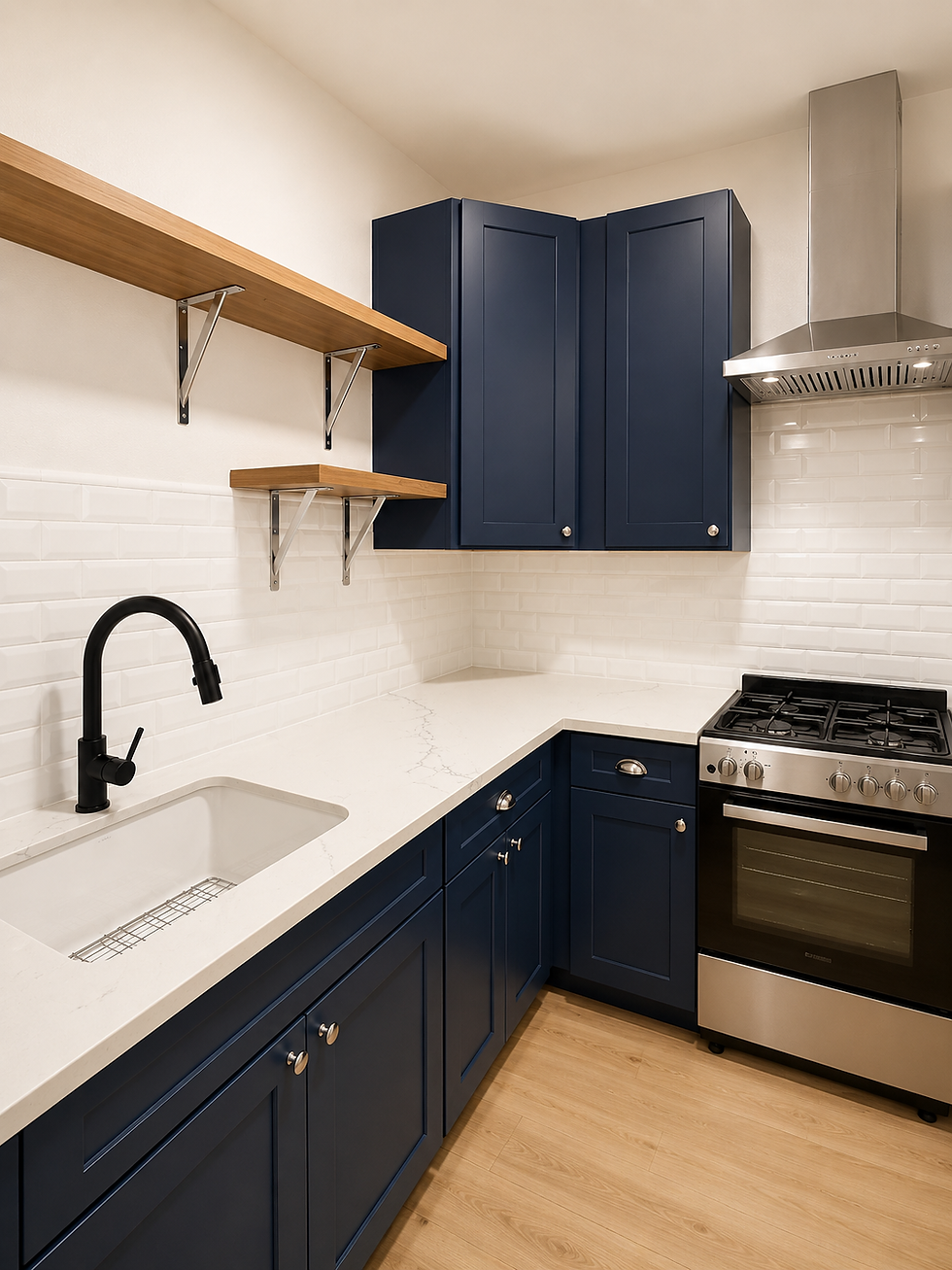
This is the go-to for a reason. LVP is waterproof, scratch-resistant, easy to clean, and looks like hardwood without the cost or maintenance. In LA's climate — where tenants might track in dust, sand, or moisture depending on proximity to the coast — LVP outperforms most alternatives. It also holds up well across multiple tenant cycles, which matters in multifamily.
Best for: Kitchens, living areas, hallways, bedrooms
Lifespan: 15–25 years with normal tenant wear
Tile
Tile is another strong performer for Southern California properties. It handles heat well, cleans easily, and is essentially indestructible in high-traffic areas. The tradeoff is longer installation time and higher labor cost, so it makes the most sense in areas where durability is the priority.
Best for: Bathrooms, laundry rooms, kitchens in units with longer lease terms
Lifespan: 30+ years
Carpet
We recommend keeping carpet only in bedrooms, if at all. It's the most affordable option upfront, but carpet in high-traffic areas wears out fast in multifamily settings — which means more frequent replacements and higher long-term cost.
Best for: Bedrooms only, if tenant demographic prefers it
Lifespan: 3–7 years in multifamily use
Hardwood
Real hardwood is rarely practical for multifamily in LA — it scratches, dents, and doesn't handle moisture well. It also comes at a significant cost premium with no meaningful durability advantage in a rental setting. Save it for owner-occupied or luxury boutique buildings where the price point supports it.
How to Think About Flooring ROI
The right flooring choice depends on your building, your market, and your tenant base. A few questions worth asking before you commit:
What's your turn frequency? If units turn every 1–2 years, durability matters more than upfront cost. LVP's lifespan across multiple tenants makes it a stronger long-term value than carpet, even if carpet is cheaper to install today.
What are comparable units offering? In submarkets where newer buildings and renovated units are setting the bar, dated flooring actively works against you during showings. The cost of vacancy often exceeds the cost of the upgrade.
Are you renovating the whole unit or just replacing flooring? If you're already doing a full turn, bundling flooring into the scope is almost always more cost-effective than scheduling it as a separate project.
Costs vary based on subfloor condition, unit size, material grade, and scope. We provide detailed estimates after a walkthrough so you know exactly what you're working with before committing to anything.
Common Flooring Mistakes in Multifamily Renovations
Replacing only damaged sections. Patching works short-term, but mismatched flooring is immediately visible to prospective tenants and hurts lease-up. When you're already doing a turn, do the whole living area in one pass.
Choosing based on showroom appeal, not durability. A floor that looks beautiful in a model unit but scratches after six months of normal use is an expensive mistake in multifamily.
Skipping subfloor prep. In older LA buildings especially, subfloor conditions vary. Poor prep leads to buckling, squeaking, and early failure — which means replacing the floor again in three years instead of fifteen.
Going too trendy. Ultra-light whitewash or very dark floors show every footprint and dust particle. Warm, mid-tone grays and natural wood tones have consistently held their appeal across tenant demographics.
What to Ask Your Contractor Before Starting
Before any flooring project in a multifamily building, make sure your contractor can answer these:
What's the current subfloor condition, and does it need repair before installation?
Are you accounting for door clearance after new flooring is installed?
What's the plan for baseboard and transition pieces?
What's the per-unit timeline, and can turns be sequenced to minimize vacancy overlap?
What's included in the warranty, and who handles defects after install?
A contractor who's done real multifamily work in Los Angeles will have clear answers to all of these — because they've already solved these problems on similar properties.
Ready to Talk Flooring for Your LA Portfolio?
At Diamond Pro, we work with multifamily operators across Los Angeles to make smart renovation decisions that hold up, attract tenants, and perform financially. We're a WBENC-certified, women-owned general contractor based in Sun Valley — and we've done enough turns across the Valley, Westside, and beyond to know what works in the LA market specifically.
If you're planning a turn season or evaluating flooring across a portfolio, we'd love to walk a unit with you. info@bediamondpro.com

Comments