Apartment Unit Turns vs. Turnkey Renovations: What Property Managers Should Know
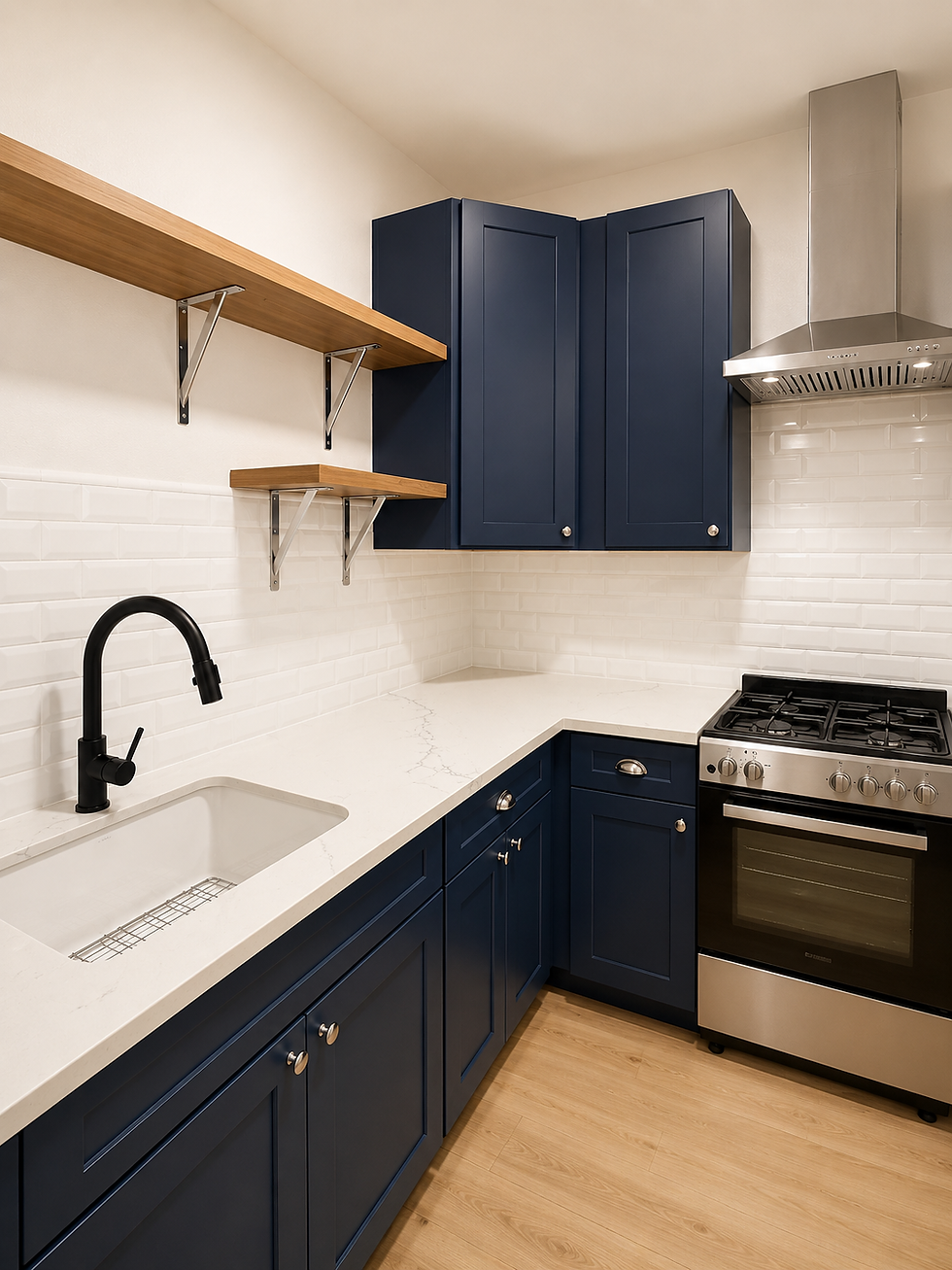
A resident moves out, and the clock starts ticking. The apartment needs to be inspected, repaired, cleaned and prepared for its next resident. But does it need a straightforward unit turn—or a more extensive renovation?
For property managers and owners, that decision affects the construction budget, vacancy period and amount of coordination required.
Understanding apartment unit turns vs. turnkey renovations starts with an important distinction: a unit turn describes the work between residents, while turnkey describes how a project is delivered. A contractor can manage a basic turn on a turnkey basis, just as they can manage a full apartment renovation.
The right approach depends on the unit’s condition, your property standards and your goals for the next leasing cycle.
What Are Apartment Unit Turns?
An apartment unit turn is the process of preparing a vacant apartment for a new resident. Property teams also use terms such as “turnover” and “make-ready.”
The primary objective is to return the apartment to a clean, functional and move-in-ready condition. A routine turn generally focuses on maintenance and repairs rather than a complete redesign.
Depending on the unit, the scope may include:
Interior painting and drywall patching.
Deep cleaning.
Flooring repairs or replacement.
Cabinet, door and hardware repairs.
Replacement of damaged fixtures or appliances.
Plumbing and electrical maintenance.
A final inspection and correction of outstanding items.
Not every apartment needs every task. A well-maintained unit may require relatively limited work, while another may need multiple trades before it is ready to lease.
A clear make-ready checklist helps establish what “ready” means for your property. Without one, unfinished details can become last-minute obstacles to move-in.
What Does a Turnkey Renovation Include?
A turnkey renovation is a delivery approach in which one provider coordinates an agreed scope of work and hands over the completed space ready for its intended use.
For multifamily properties, that scope might include:
Kitchen and bathroom remodeling.
Cabinet and countertop replacement.
New flooring throughout the apartment.
Lighting and plumbing fixture upgrades.
Drywall repairs and interior painting.
Finish carpentry and hardware installation.
Coordination of materials, trades and project sequencing.
Final walkthrough and punch-list completion.
The word “turnkey” does not automatically mean a full gut renovation. It also does not mean that every service, appliance or approval is included.
Property managers should confirm exactly what the contractor will handle, what the owner must provide and how completion will be documented. The written scope matters more than the label.
Apartment Unit Turns vs. Turnkey Renovations: The Key Differences
A routine unit turn is usually driven by the need to prepare an apartment for its next resident. A more extensive renovation may also aim to modernize finishes, replace aging components or bring the unit into alignment with a property-wide improvement plan.
The differences generally come down to three questions.
What Is the Goal?
A basic turn restores the apartment to your existing leasing standard.
A renovation changes or improves that standard—for example, replacing an outdated kitchen rather than repairing its existing cabinets.
How Much Work Is Required?
A turn may involve cleaning, painting and targeted repairs.
A renovation can involve demolition, new materials and coordinated work across several trades. However, a heavily damaged turnover can also require substantial construction.
Who Coordinates the Work?
An in-house team may manage a routine turn using individual vendors.
With turnkey renovation management, one provider coordinates the contracted work. This can simplify communication, but responsibilities and exclusions still need to be clearly defined.
These approaches can overlap. An apartment can receive a turnkey-managed unit turn, a partial renovation or a comprehensive remodel between residents.
When Is a Standard Unit Turn the Right Choice?
A routine turn may be appropriate when the apartment is in good overall condition and its existing finishes still meet your leasing standards.
For example, the kitchen may remain functional, the bathroom may need only minor repairs, and the flooring may be suitable for cleaning or limited replacement.
Before approving the scope, consider:
Are the cabinets, fixtures and appliances serviceable?
Does the apartment match the condition you advertise?
Can targeted repairs address the identified problems?
Are you maintaining the existing finish package?
Is there any damage that needs further investigation?
If the unit meets your property’s standards after necessary repairs and cleaning, a broader remodel may not be needed for that leasing cycle.
However, visible water damage or recurring maintenance problems should not be treated as cosmetic issues simply to shorten the turn.
When Should You Consider a More Extensive Renovation?
A larger renovation may make sense when repairs alone will not address the apartment’s condition or your property goals.
Common reasons include:
Worn or outdated kitchens and bathrooms.
Repeated failures involving aging components.
Significant damage requiring reconstruction.
Inconsistent finishes across the property.
A planned transition to a new unit finish package.
A need to complete several connected improvements together.
For example, replacing cabinets, countertops, flooring and fixtures at the same time requires more coordination than repainting an otherwise functional apartment.
Before proceeding, compare the proposed improvements with local leasing conditions and your investment objectives. New finishes do not automatically guarantee higher rent or faster leasing.
How to Budget for Unit Turns and Renovations
The cost depends on the actual scope—not whether the project is called a turn or a turnkey renovation.
Important factors include:
Apartment size and existing condition.
The amount of demolition and reconstruction.
Material selections and availability.
Plumbing and electrical work.
Appliance and fixture requirements.
Site access and building restrictions.
Hidden conditions discovered during construction.
Ask for an estimate that separates the agreed work, exclusions and allowances. Establish a process for approving additional work before it begins.
Vacancy should also be part of the comparison.
For illustration, an apartment renting for $2,400 per month represents approximately $80 per day using a simple 30-day calculation. An additional ten vacant days would represent about $800 in potential rent—not including operating expenses or leasing concessions.
That does not mean the fastest option is always best. It means the decision should consider construction costs, downtime and the condition of the finished apartment together.
What Affects the Project Timeline?
A reliable schedule starts with a defined scope and confirmed material availability.
Cleaning, painting and limited repairs require a different sequence from a kitchen and bathroom remodel. New cabinets, specialty materials, inspections or unexpected damage can also affect completion.
Before setting a leasing date, confirm:
When the unit will be accessible.
Whether selections and approvals are complete.
Which materials are available.
How trades will be scheduled.
Whether any inspections or other approvals are required.
When the final walkthrough will happen.
Distinguish between “construction substantially complete” and “ready for resident move-in.” Final cleaning, corrections and property-team acceptance may still need to happen before keys can be handed over.
How Property Managers Can Reduce Avoidable Delays
Preparation can make both unit turns and renovations easier to manage.
Standardize your finish package. Approved flooring, paint colors, hardware and fixtures can reduce repeated selection decisions.
Inspect and document the condition. Photographs and a written scope help everyone understand what needs attention.
Set approval responsibilities early. Identify who can authorize selections, additional work and schedule changes.
Coordinate work across trades. Plan the sequence so completed finishes are not damaged by work that should have happened earlier.
Define the handoff. Use a final walkthrough and punch list to confirm that the contracted work meets the agreed standard.
The objective is not simply to finish quickly. It is to avoid preventable delays and hand over an apartment that is genuinely ready for the next step.
Unit Turns and Turnkey Renovations in Southern California
Every vacant apartment needs an approach that fits its condition and the property’s goals. Some require a focused make-ready. Others need a coordinated renovation before returning to the market.
Diamond Pro provides apartment unit turnovers, turnkey renovations, kitchen and bathroom remodeling, flooring, painting and fixture upgrades for multifamily properties in Southern California.
If you are planning an upcoming turn or a broader renovation, start with a walkthrough and a clearly defined scope.
Explore Diamond Pro’s multifamily renovation services and contact our team to discuss your property.


Comments