Multifamily Deferred Maintenance: Why the Most Expensive Decision Is a Delayed One
Updated: Sep 11
There is a common belief in multifamily ownership that the biggest financial risk is a bad renovation. The wrong finishes, the wrong contractor, the wrong scope — all valid concerns. But in practice, the most expensive decision most owners make is not a bad one. It is a delayed one.

Multifamily deferred maintenance does not feel like a crisis when it starts. A slow drain, a hairline crack in the stucco, a water heater past its expected life. None of these look urgent in isolation. But each one is accumulating cost in the background — and by the time it becomes visible, the repair is significantly more expensive than it would have been six or twelve months earlier.
The math on waiting almost never works in your favor. Here is why.
You Are Losing Rent You Could Be Collecting
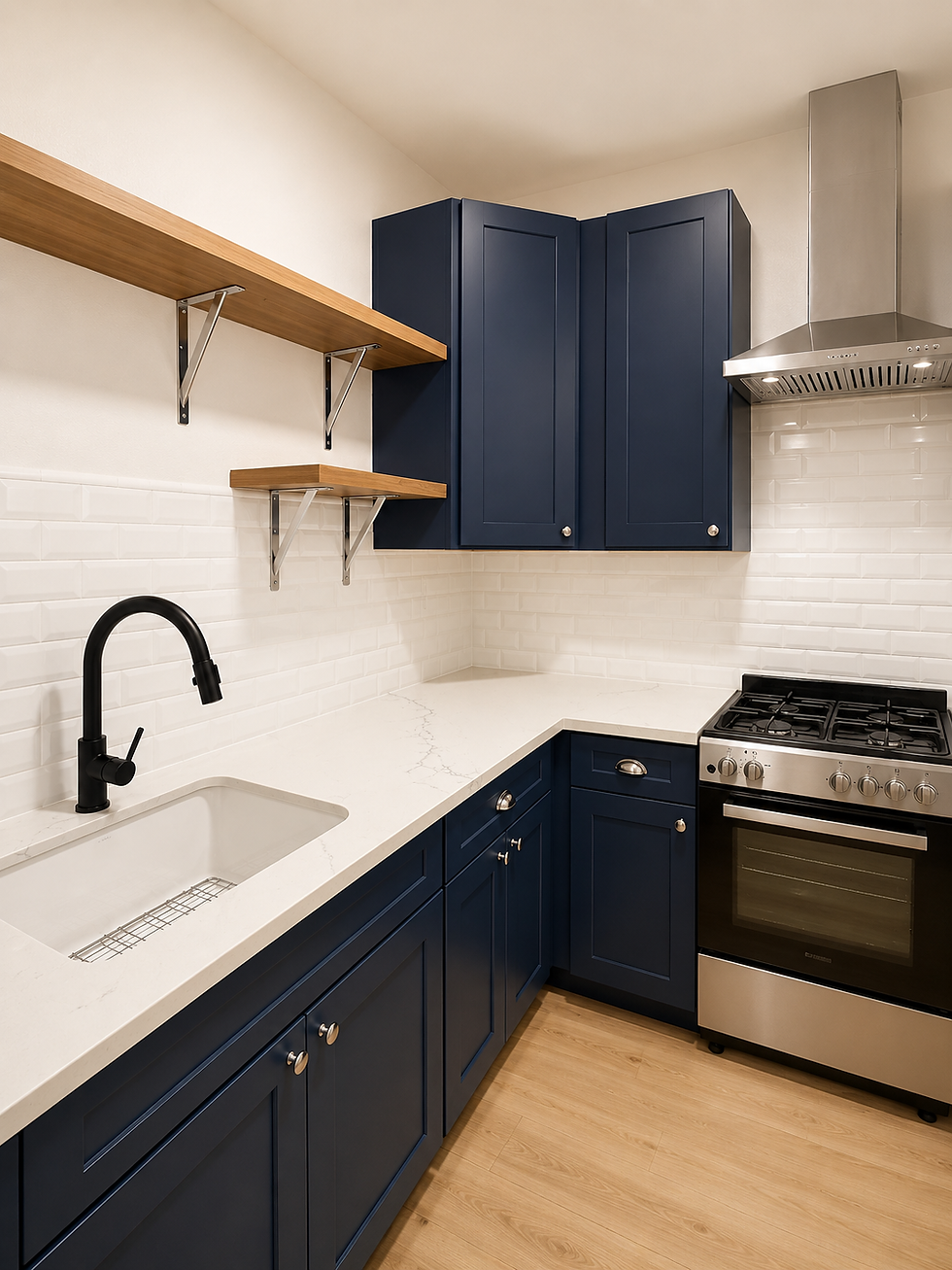
Every unit that sits with outdated finishes, worn flooring, or a kitchen that has not been touched in fifteen years is underperforming. Tenants are comparing your unit to the one down the street that was recently refreshed — and they are making their decision accordingly.
You do not need a luxury renovation to stay competitive. But you do need to keep your units at market standard. When maintenance gets deferred, units fall further behind the market, rent increases stall, and the gap between what you are collecting and what you could be collecting grows wider every month.
That gap is not theoretical. It shows up in your NOI, your property valuation, and eventually your refinancing terms.
Small Problems Compound Into Big Ones
This is where multifamily deferred maintenance becomes truly expensive. A $500 plumbing issue that gets patched instead of repaired becomes a $5,000 problem when the pipe fails inside a wall. A $2,000 roof patch becomes a $40,000 replacement when water has been sitting on the deck for two years.
The pattern is always the same. The first repair is manageable. The second is inconvenient. The third is an emergency — and emergencies do not come with competitive bids, planned timelines, or negotiating leverage. You pay what you pay, and you pay it now.
Property owners who stay ahead of maintenance are not spending more money over time. They are spending it when the fix is smaller, the options are better, and the disruption to tenants is minimal.
Tenant Turnover That Could Have Been Prevented
Tenants leave for a lot of reasons, but one of the most common is the feeling that their home is not being taken care of. Maintenance requests that take too long. Cosmetic issues that never get addressed. Common areas that look worse every year.
When a tenant decides not to renew, the cost is significant — lost rent during vacancy, unit turn expenses, leasing commissions, and the risk that the next tenant pays less. In the LA market, a single turnover can cost $5,000 to $10,000 or more depending on the unit and the condition it is left in.
Much of that turnover is preventable. Not with grand gestures, but with consistent upkeep that signals to tenants that the property is managed well and worth staying in.
The Budget Cycle Trap
Most deferred maintenance does not happen because owners do not care. It happens because of how capital gets allocated. Budget cycles push decisions to next quarter. Vendor delays push timelines to next year. Competing priorities push maintenance behind new acquisitions, debt service, and ownership distributions.
The result is a backlog that grows quietly until something breaks — and then the conversation shifts from planning to damage control. That shift always costs more.
The owners and property managers who avoid this trap treat maintenance as a capital strategy, not a line item. They walk their properties regularly, track the age and condition of major systems, and plan repairs before those repairs become emergencies.
Why the Cost of Multifamily Deferred Maintenance Is Always Higher Than the Estimate
There is a compounding effect that most owners underestimate. When one system fails, it usually damages the systems around it. A leaking pipe damages drywall, subfloor, and sometimes the unit below. A failing roof damages insulation, framing, and interior finishes. A broken gutter damages the foundation.
The original repair might have been straightforward. But once the damage has spread, the scope grows — and so does the cost, the timeline, and the disruption.
This is why the actual cost of deferred maintenance is almost always higher than the estimate owners had in their heads when they decided to wait. The estimate was for the original problem. The invoice is for everything the original problem caused.
What a Proactive Approach Looks Like
Staying ahead of maintenance does not require a massive capital outlay. It requires a system. Walk the property quarterly. Track the age and condition of roofs, water heaters, HVAC systems, plumbing, and exterior finishes. Build a rolling 12-month repair plan so that work gets distributed across the year instead of stacking up.
When you plan repairs, you get competitive bids. You schedule work during low-occupancy periods. You coordinate with tenants in advance. And you control the cost instead of reacting to it.
That is the difference between a property that performs and one that slowly bleeds value.
The Bottom Line
The most expensive decision in multifamily is not choosing the wrong countertop or overspending on a renovation. It is sitting on a known issue and letting time turn a manageable repair into a capital event.
If your property has a growing list of deferred items — whether it is aging roofs, outdated units, or exterior issues you have been meaning to address — the right time to act is before the next emergency forces your hand.
Diamond Pro specializes in multifamily and commercial properties across Southern California. If you are looking at a backlog of deferred work and need a plan to get ahead of it, we can help.

Comments