How Smart Renovations Drive Tenant Retention in Multifamily Properties
Nobody talks about the real reason tenants leave.
It's not always the rent increase. It's not always the commute. Most of the time, tenants leave because the unit stopped feeling worth what they're paying. The countertops are chipped. The flooring is worn. The bathroom feels dated. The building entrance looks tired.
They don't submit a complaint. They don't ask for a renovation. They just don't renew.
And then the property manager is left dealing with vacancy costs, turnover expenses, and the assumption that "the market is soft" — when the real issue was the product.
Tenant retention is not a leasing problem. It's a renovation problem. And the properties that figure this out spend less on marketing, less on turnover, and generate more consistent revenue than the ones still chasing new tenants every 12 months.
Here's how renovation strategy directly drives tenant retention in multifamily properties.

The Cost of Losing a Tenant
Before talking about renovation strategy, it's worth understanding what tenant turnover actually costs.
When a tenant leaves a unit in the Los Angeles market, the typical cost breaks down like this:
3-6 weeks of vacancy: $2,200-4,400 in lost rent (at $2,950/month average effective rent in LA)
Unit turn costs (cleaning, paint, minor repairs): $2,000-4,000
Leasing costs (marketing, showings, screening, lease processing): $500-1,500
Administrative time from your property management team: hard to quantify, but real
That's $4,700-9,900 per unit turn. On a 20-unit building with 25% annual turnover, that's $23,500-49,500 per year in turnover costs alone.
Now compare that to a targeted renovation that costs $8,000-12,000 per unit but keeps tenants renewing for 3-4 years instead of leaving after 12 months.
The math is not close.
Why Tenants Actually Renew
Property managers often assume tenants renew because of price. If the rent is competitive, they'll stay. If the rent goes up too much, they'll leave.
That's partially true. But research on tenant behavior shows something more nuanced: tenants renew when the perceived value of their unit matches or exceeds what they're paying. Price is only one variable. The condition of the unit is another — and in many cases, it's the bigger one.
A tenant paying $2,200/month in a unit with updated finishes, modern fixtures, and well-maintained common areas feels like they're getting a fair deal. The same tenant paying $2,000/month in a unit with stained carpeting, old appliances, and a lobby that hasn't been touched in 15 years feels like they're overpaying.
The $200 difference in rent is not what drives the decision. The perceived gap between price and product is.
This is why renovation is a retention tool — not just a rent-increase tool.
Tenant Retention Multifamily Renovations: The Strategies That Actually Work
Not all renovations affect retention equally. Some upgrades make the unit look better in photos but don't change how the tenant feels about living there. Others are invisible on a listing but make the difference between a renewal and a move-out.
Here are the renovation categories ranked by retention impact:
1. Flooring
This is the single highest-impact renovation for retention. Tenants walk on the floor every day. Worn carpet, cracked tile, and dated linoleum make a unit feel old regardless of what else you've done. New LVP flooring transforms a unit's feel immediately and holds up for 10+ years.
Cost: $2,500-4,000 per unitRetention impact: High
2. Kitchen Updates
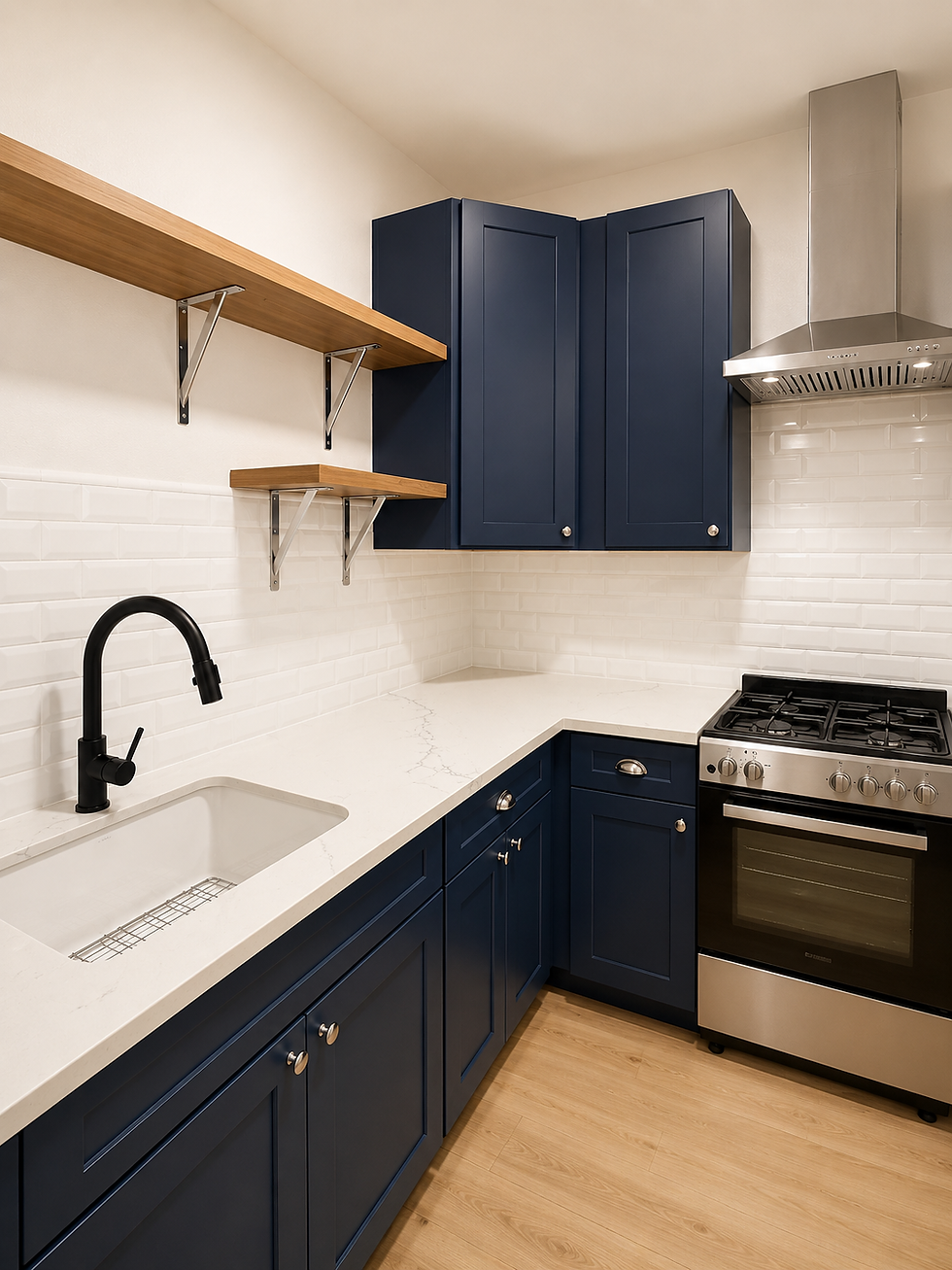
Tenants spend significant time in the kitchen. You don't need a full gut — updated cabinet faces, modern hardware, a new countertop, and a fresh backsplash make the kitchen feel current. If the appliances are visibly old, replacing them completes the picture.
Cost: $3,000-5,500 per unit (targeted, not full gut)Retention impact: High
3. Bathroom Refresh
Similar to kitchens — a full gut isn't necessary. New fixtures, updated lighting, a reglazed tub, and modern hardware change the bathroom entirely. Tenants notice bathrooms that feel neglected.
Cost: $1,500-3,000 per unitRetention impact: Medium-High
4. Paint and Lighting
Fresh paint is the cheapest renovation with the highest ROI. Modern, neutral tones make a unit feel clean and current. Pair it with updated light fixtures (especially in the kitchen and bathroom) and the unit feels like it's been fully renovated even when it hasn't.
Cost: $800-1,500 per unitRetention impact: Medium
5. Common Area Improvements
This one gets overlooked. The lobby, hallways, laundry room, and exterior entrance are the first and last things tenants see every day. A building with clean, modern common areas signals that management cares. A building with a tired lobby and stained hallway carpet signals the opposite.
Cost: Varies by scopeRetention impact: Medium (affects all tenants simultaneously)
6. Exterior and Curb Appeal
Fresh paint on the exterior, updated landscaping, clean signage, and well-maintained parking areas affect how tenants feel about where they live. Nobody wants to bring friends or family to a building that looks neglected from the outside.
Cost: Varies by scopeRetention impact: Medium (especially for attracting new tenants)
The Renovation Sequence That Maximizes Retention
The mistake most property managers make is renovating units only when they're vacant. This means you're spending money to attract new tenants — not to keep the ones you already have.
A smarter approach:
Phase 1: Common areas first. This affects every tenant in the building immediately. Fresh paint in hallways, updated lighting, clean lobby. Low cost per unit, high visibility. Every tenant sees the improvement and interprets it as "management is investing in this building."
Phase 2: Targeted unit upgrades on renewal. When a lease is coming up for renewal, offer the tenant a renovation package: new flooring, paint, and fixture updates in exchange for a 2-year lease at a modest rent increase ($100-200/month). The tenant gets a better unit without moving. You get a longer lease commitment and avoid turnover costs.
Phase 3: Full unit renovation on vacancy. When a unit does turn over, renovate it fully before re-leasing. This unit now commands top-of-market rent and attracts a higher-quality tenant who is more likely to stay.
This sequencing is important because it prioritizes retention (keeping existing tenants) before acquisition (attracting new ones). Most property managers do it backwards — they renovate vacant units to attract new tenants while ignoring the tenants they already have.
The Numbers: Retention-Driven Renovation vs. Traditional Approach
Traditional approach (renovate on vacancy only):
20-unit building, 25% annual turnover = 5 units turning per year
Turnover cost per unit: $6,000 (vacancy + turn + leasing)
Annual turnover cost: $30,000
Renovation cost per vacant unit: $10,000
Annual renovation spend: $50,000
Total annual cost: $80,000
Result: 5 new tenants per year, no improvement in renewal rate
Retention-driven approach (renovate to retain + renovate on vacancy):
Common area refresh (year 1): $15,000
Renewal renovation packages (10 units at $5,000 each): $50,000
Turnover drops from 25% to 15% = 3 units turning per year
Turnover cost per unit: $6,000
Annual turnover cost: $18,000
Renovation cost per vacant unit: $10,000
Annual renovation spend on vacant units: $30,000
Total annual cost: $113,000 (year 1, includes common area one-time cost)
Year 2+ annual cost: $98,000
But here's the difference: in year 2 and beyond, you have 10 tenants on 2-year leases paying $100-200 more per month. That's $12,000-24,000 in additional annual revenue. And your turnover costs dropped by $12,000/year.
Net impact by year 3: The retention-driven approach is generating $24,000-36,000 more per year in revenue while spending roughly the same on renovations. The difference compounds every year as more tenants are on longer leases in updated units.
What This Looks Like in Practice
A property manager in the San Fernando Valley came to us with a 24-unit building that had 30% annual turnover. Units were dated — original flooring, old fixtures, tired common areas. Rent was below market but tenants were still leaving.
We phased the renovation over 12 months:
Month 1-2: Common area refresh (hallways, lobby, exterior paint)
Month 3-8: Renewal renovation packages offered to 12 tenants (8 accepted)
Month 9-12: Full renovation on 4 vacant units
Result after 18 months: turnover dropped to 12%. Average rent increased by $275/month across renovated units. The building's annual revenue increased by roughly $50,000 while turnover costs dropped by $35,000.
The owner's initial reaction was that $120,000 in renovation costs seemed aggressive. Eighteen months later, the building was generating $85,000 more per year than before the renovation — a payback period of under 18 months.
The Takeaway
Tenant retention is not about keeping rent low. It's about making the product worth what you're charging.
The properties with the highest renewal rates are not the cheapest. They're the ones where tenants feel like they're getting value — updated units, maintained common areas, responsive management.
Renovation is the most direct lever you have to influence that perception. And when you sequence it correctly — common areas first, renewal packages second, vacancy renovations third — the math works in your favor every time.
Diamond Pro Apartment Experts works with multifamily and commercial property managers across Southern California to plan and execute renovation strategies that drive retention, not just rent. We understand the sequencing, the budgeting, and the construction realities of renovating occupied buildings.
If your turnover rate is costing you more than your renovation budget, the strategy is backwards. Get in touch at hello@diamondproapt.com or visit bediamondpro.com to talk through your property.


Comments